
Business
Popular portable fire pit recalled for posing a burn risk
By Angela Tran
Advertisement · Why this ad?
Angela Tran is a seasoned business reporter with ten years of experience, formerly at Newsday and currently focused on local enterprises in Garden City. She holds an MBA from Fordham University and is passionate about spotlighting the stories behind small businesses and community entrepreneurs.
More from Angela →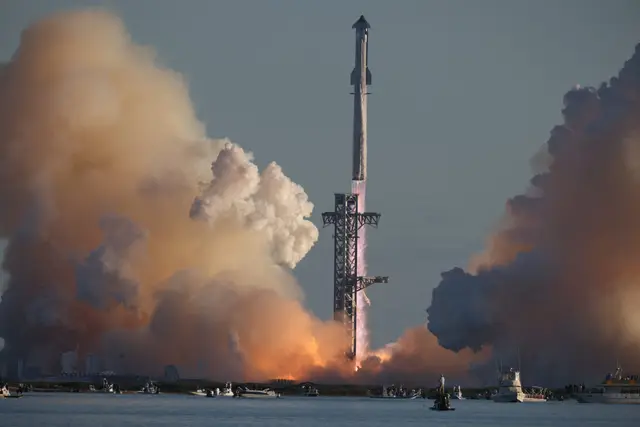
On a clear Friday evening, SpaceX’s Starship rocket soared into the sky from its base in South Texas, marking the 15th flight of this ambitious spacecraft. The launch, intended to achieve a historic return of both the Starship and Super Heavy rocket to the launch site, ultimately resulted in a fiery splashdown for the Super Heavy booster in the ocean. While Starship successfully launched and entered orbit, the failure to recover the booster underscores the significant challenges and ongoing innovation inherent in SpaceX’s quest to revolutionize space travel.
The launch window opened at 4:45 p.m. Central Time, drawing a crowd of spectators from across Texas, North Carolina, and Connecticut. SpaceX had aimed to achieve a milestone by returning both the Starship and Super Heavy rocket to the launch site, a feat that would significantly reduce the cost of space travel. As Elon Musk explained at the X Takeover 2025 event, “If every time you drove somewhere you had to throw away the car, you'd be 'Wow, that's a crazy car where you have to throw away after every time you drive it.' But that's how it works for rockets.”
Starship represents SpaceX’s next-generation launch system, designed to be fully reusable and capable of carrying both crew and cargo to the Moon, Mars, and beyond. The Super Heavy booster, the first stage of the launch vehicle, is engineered to return to Earth for reuse, a critical component of SpaceX’s vision for drastically reducing the cost of space access. The Boca Chica launch site, located near Brownsville, Texas, serves as SpaceX’s primary testing and launch facility for Starship and Super Heavy. The area has seen significant economic development in recent years due to SpaceX’s presence, attracting tourists and creating jobs in the region. However, the frequent launch attempts and associated closures have also led to some local concerns regarding traffic and environmental impact.
Flight 15 was designed to last approximately 22 hours, with Starship orbiting Earth 14 times and deploying 26 Starlink V3 satellites, adding capacity to SpaceX’s orbital communications network. These Starlink satellites are crucial for providing high-speed internet access to underserved areas around the globe, a key part of SpaceX’s broader mission. According to SpaceX, if Starship could not return to the launch site, there were several opportunities for it to de-orbit and splashdown in the ocean – a contingency that was ultimately enacted for the Super Heavy booster. The company's long-term vision extends beyond these incremental steps, aiming to utilize Starship for crewed missions to Mars.
The launch drew a curious crowd from across the state and beyond. Randall Folsom, a visitor from North Carolina, expressed his awe at the spectacle: “It’s just stunning to me. I've been watching it for years on TV. To me, being able to launch something that big, that complicated, catch it—that's the holy grail of rocketry, right?” The failure of the Super Heavy rocket to return to the pad has ignited discussions about the feasibility of SpaceX’s goal of reusable rockets, a key factor in reducing space travel costs. Currently, NASA rockets are not reusable. The pursuit of reusability is not merely about cost savings; it's about enabling more frequent and ambitious space missions, paving the way for human expansion beyond Earth. The challenges associated with landing a massive rocket booster like Super Heavy are immense, requiring precise navigation, control systems, and a degree of luck.
This launch follows closely on the heels of Flight 14 in September, which saw Starship achieve orbit and deploy Starlink satellites. However, that mission was cut short when Starship was forced to splashdown in the Pacific Ocean approximately three hours after launch. The data collected from each flight, including Flight 14 and 15, is invaluable for SpaceX engineers as they iterate on the design and improve the reliability of the Starship system. Beyond the launch site, SpaceX has ambitious plans to build a $24 billion data center outside of Brownsville, Texas, a project requiring the city to de-annex land earlier this year. This data center is intended to support SpaceX’s growing operations and the increasing demand for satellite internet services. The de-annexation process itself sparked debate within Brownsville, with some residents concerned about the potential impact on city revenues and services.
SpaceX's activities in Boca Chica have also raised environmental concerns among some local residents and advocacy groups. The frequent launch attempts and associated testing can disrupt wildlife habitats and impact the delicate coastal ecosystem. SpaceX has been working to mitigate these impacts through various measures, including conducting environmental assessments and implementing noise reduction strategies. However, the ongoing debate highlights the challenges of balancing economic development with environmental protection in a sensitive coastal region.
Flight 15 opened its launch window on November 13, 2026. SpaceX’s immediate future includes participation in NASA’s Artemis III mission, slated for the summer of 2027, which will test complex orbital docking exercises between an Orion capsule and lunar landers from SpaceX and Blue Origin. Artemis IV, planned for no sooner than 2028, aims to return humans to the Moon’s surface. The selection of SpaceX as a partner in the Artemis program represents a significant endorsement of the company’s capabilities and a key step towards establishing a sustainable human presence on the Moon.
The ultimate goal of Elon Musk’s SpaceX is to enable human settlement on Mars. The development of Starship is a critical step towards achieving this ambitious vision. The challenges of establishing a self-sustaining colony on Mars are immense, requiring advancements in areas such as life support, resource utilization, and radiation shielding. Beyond Mars colonization, SpaceX’s technology advancements are also integral to NASA’s Artemis program, which aims to establish a sustainable human presence on the Moon. The company's pursuit of reusable rockets promises to dramatically reduce the cost of space travel, potentially opening up new opportunities for scientific research, commercial ventures, and even space tourism.
Despite the setback with the Super Heavy rocket’s splashdown, SpaceX remains committed to its long-term goals and continues to refine its technology. The company is expected to conduct further tests and modifications to both the Starship spacecraft and the Super Heavy booster in the coming months. The data gathered from Flight 15 will be crucial in identifying areas for improvement and ensuring the safety and reliability of future launches. The ultimate success of Starship hinges on SpaceX’s ability to master the complexities of reusable rocket technology and overcome the challenges of deep-space exploration.
As SpaceX continues its journey, residents of Garden City and surrounding communities can play a role by staying informed about the company’s progress and supporting initiatives that promote scientific advancement and economic development. The launch site in Boca Chica holds the potential to bring significant benefits to the region, creating jobs and fostering a culture of innovation. The pursuit of space exploration represents a vital investment in the future, and SpaceX’s ongoing efforts are a testament to the enduring human desire to reach for the stars.
Manhasset, New York
Business
Saturday, November 14, 2026
5 min
By Angela Tran

By Angela Tran

By Maria Gomez

By Maria Gomez